The Mission
Create motion for hyperexponential’s events and product launches, translating an established visual language into engaging experiences across event screens, product content, and digital out-of-home environments.
The Outcome
A flexible motion system spanning hx Live London and NYC, the hyperoperator launch, and large-scale public displays, with reusable animation setups that could adapt across speakers, formats, screens, and campaigns.
The Impact
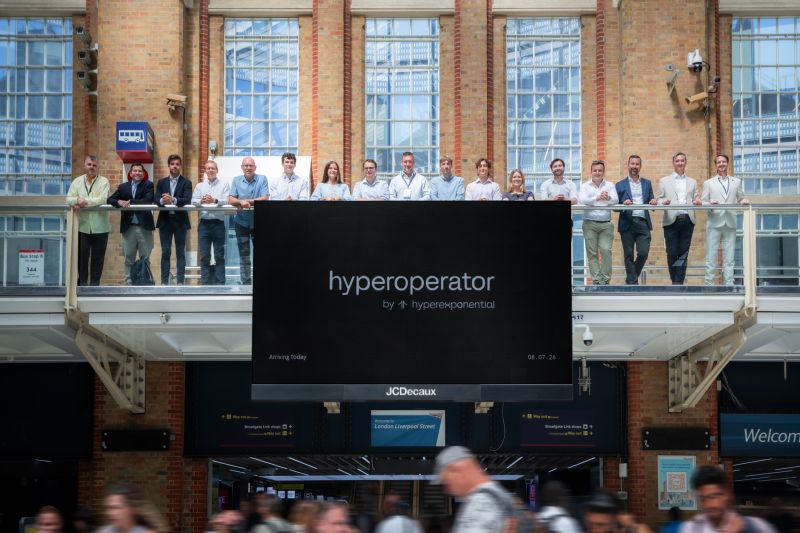
The work appeared across hx Live events, hyperexponential’s homepage, London Liverpool Street station, Nasdaq MarketSite in Times Square, and digital screens across ITC Vegas, extending the brand and product story far beyond the event stage.
Client
Services
- Motion Graphics
- Storyboard Development
- Sound Editing
- Music Synchronization
- Format Adaptation
Software used
Figma
After Effects
Notion
Miro
From Event Screens to City Screens
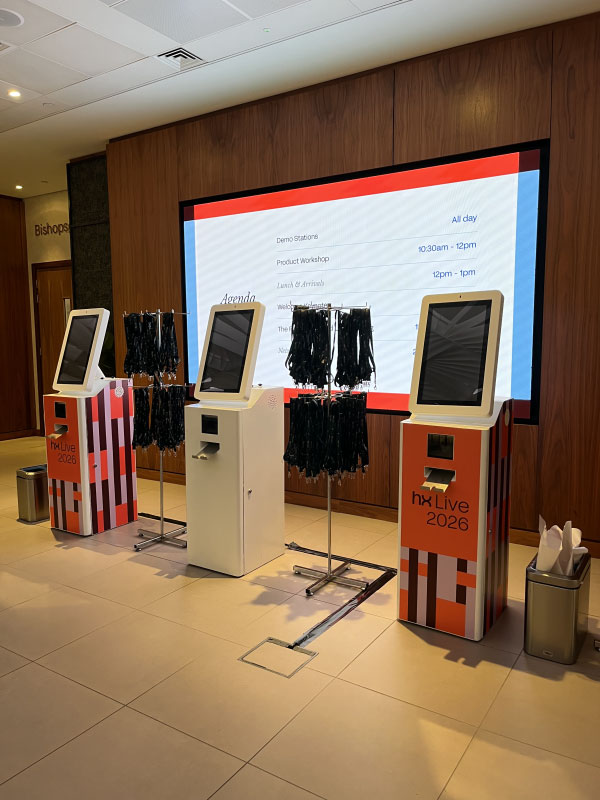
My collaboration with hyperexponential started with hx Live London 2026, where I was brought in to create motion for the event, from speaker introductions and media walls to supporting content around the launch of hyperoperator, the company’s AI agent for commercial insurance underwriting.
What started as a focused event project grew into an ongoing collaboration. Two months later, hyperexponential brought me back for hx Live NYC, where I built on the motion language from London and created new content for the event. Along the way, the work expanded beyond the conferences themselves, with animations appearing across product launches, social campaigns, digital out-of-home placements, and large public screens.
For me, the interesting part was seeing how the same visual language could adapt to very different environments without losing its identity.
Starting with hx Live London
For the London event, I received the established hx Live visual system and a set of designed assets from the hyperexponential team. My role was to translate those static elements into motion and create a consistent language across the event content.
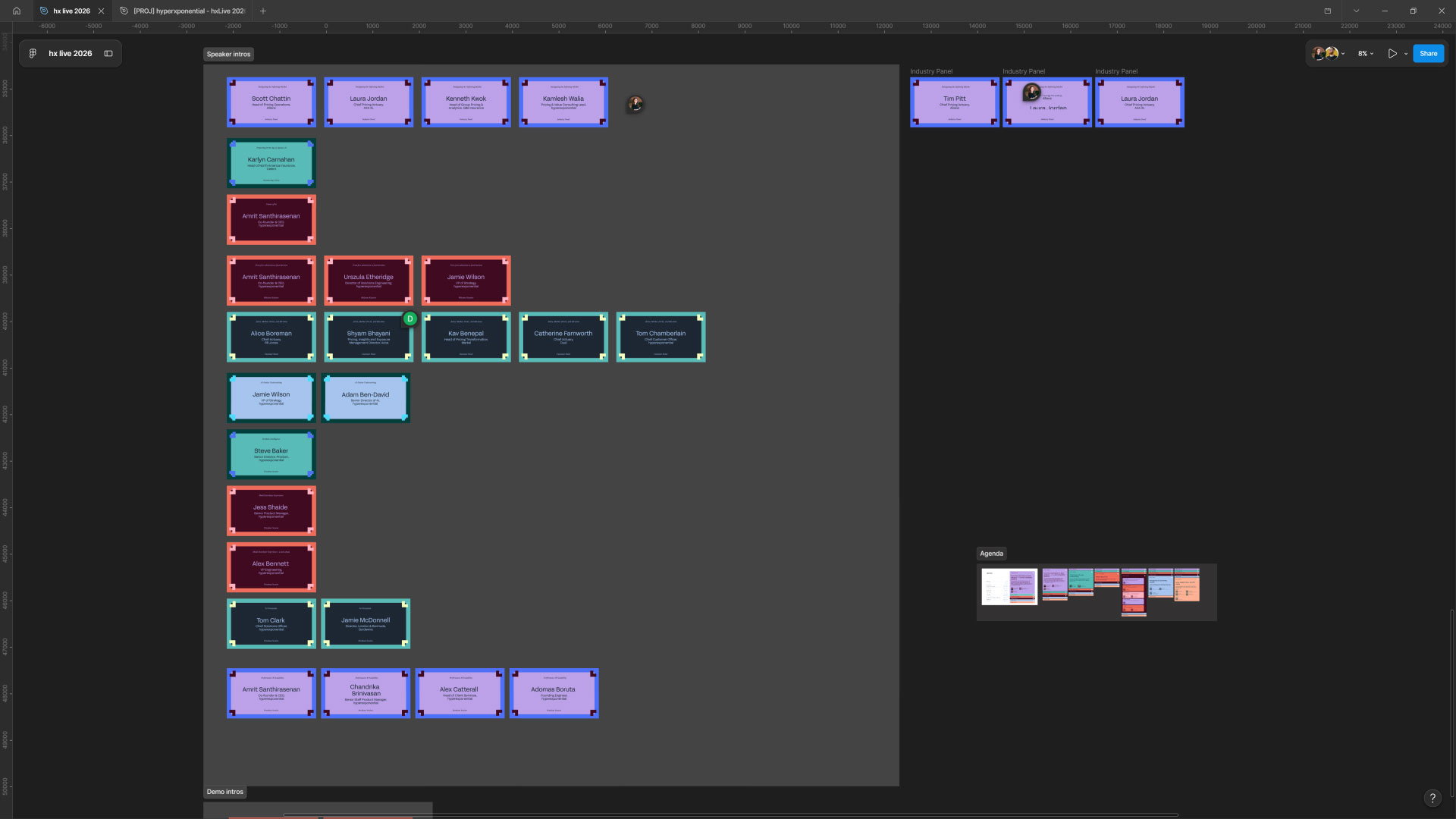
For the speaker title boards, I received the final designs and developed the animation used to introduce each speaker on stage. The aim was to create a single motion treatment that could work across different speakers, sessions, and color combinations while staying consistent with the event identity. Once approved, I applied the animation across the full set of speakers.
The media walls were a little more open-ended. I worked from the event design system in Figma, along with draft storyboard concepts that outlined how the content could move. From there, I developed the transitions and animated sequences for the screens around the venue, using the supplied assets as a starting point. The goal wasn’t to reinvent the visual identity, but to give the existing system a sense of movement and energy that would work naturally within the physical space.
Turning a Template into a System
When hyperexponential came back two months later for hx Live NYC, they needed more speaker title boards animated. Rather than creating each one individually, I decided to turn the setup I had built for London into a reusable system and automate as much of the process as possible.
I connected the color properties to a single controller, allowing me to switch between the approved themes instantly from a dropdown. Creating a new speaker then mostly meant replacing the name and session title and selecting the right theme. This made it much faster to produce different versions while keeping everything consistent.
A New Product, A New Context
Around the same time, hyperexponential was preparing to launch hyperoperator, its AI agent for commercial insurance underwriting. The team asked me to create a promotional animation around the launch. The storyboard and visual direction came from the designer, and I focused on bringing the supplied design and assets into motion.
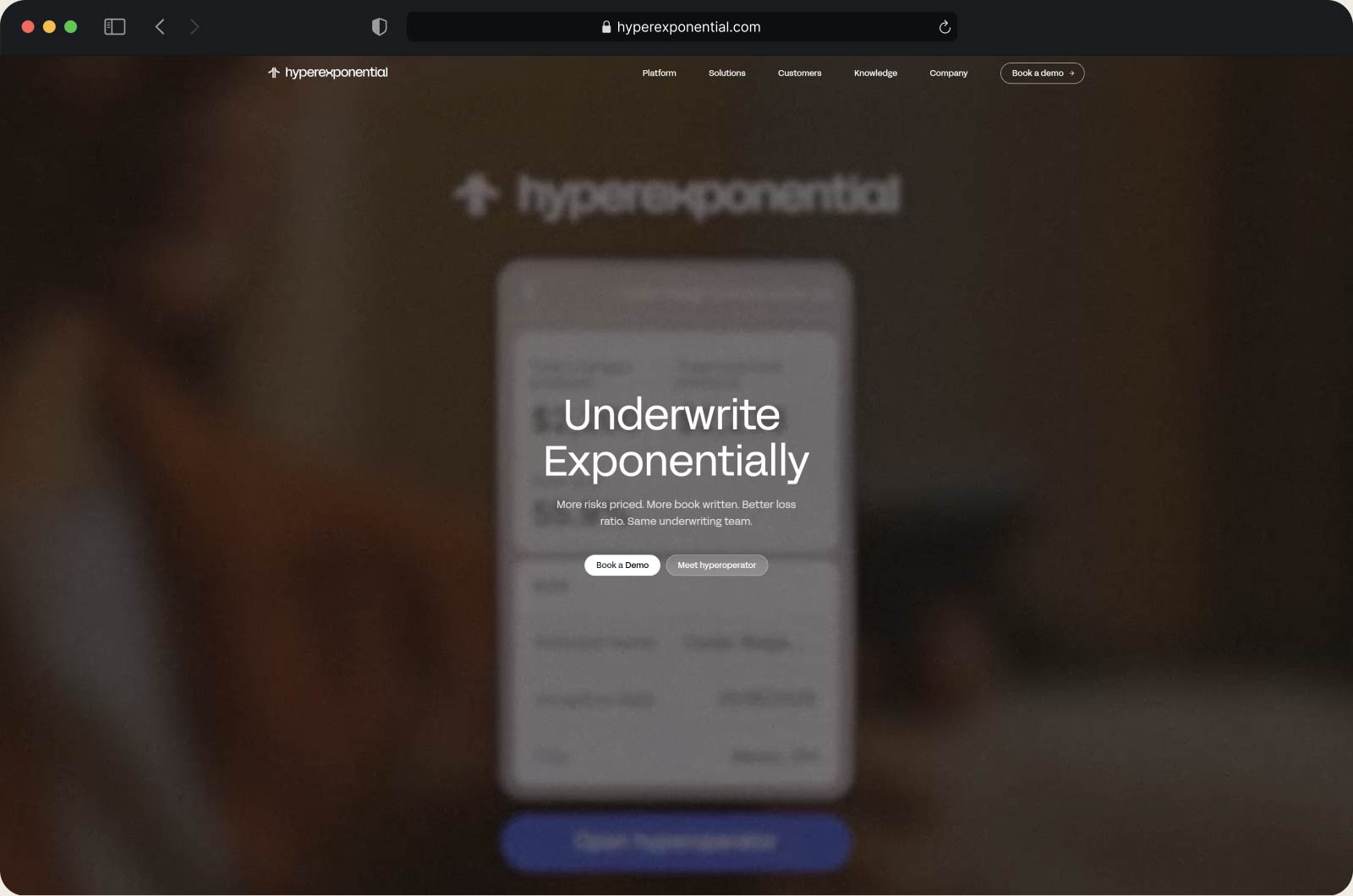
The animation was released as part of the London campaign and, unlike the event content, wasn’t limited to a conference environment. It appeared on the large digital screens at London Liverpool Street station and was also adapted for the hyperexponential homepage.
Designing for the Real World
The hyperoperator campaign eventually took the work even further, including a placement at Nasdaq MarketSite in Times Square. The challenge wasn’t simply creating an animation for an unusual format. The physical structure of the screen itself had to become part of the design.
Windows interrupted the display area, creating sections where the animation would disappear from view. This meant the composition and movement had to be planned around the architecture rather than treating the screen as one continuous canvas. The motion also had to work at a very different scale and viewing distance, catching attention without becoming visually overwhelming.
It was a different kind of motion design problem from working inside a UI or a traditional video frame. I was designing for a physical place as much as I was designing for a screen.
Building for Different Screens
The same campaign continued into other environments, including ITC Vegas 2026. For the in-vehicle and airport screens, I repurposed the existing Liverpool Street animation and adapted it to the shorter 15-second format.
The taxi-top placements required a different approach. These screens are seen in motion, often from a distance and without sound, so there was little value in filling them with complex animation. I created a simpler version focused on the hyperexponential logo and the core message, with two color variations. The animation was deliberately restrained so the important information could register quickly in a constantly moving environment.
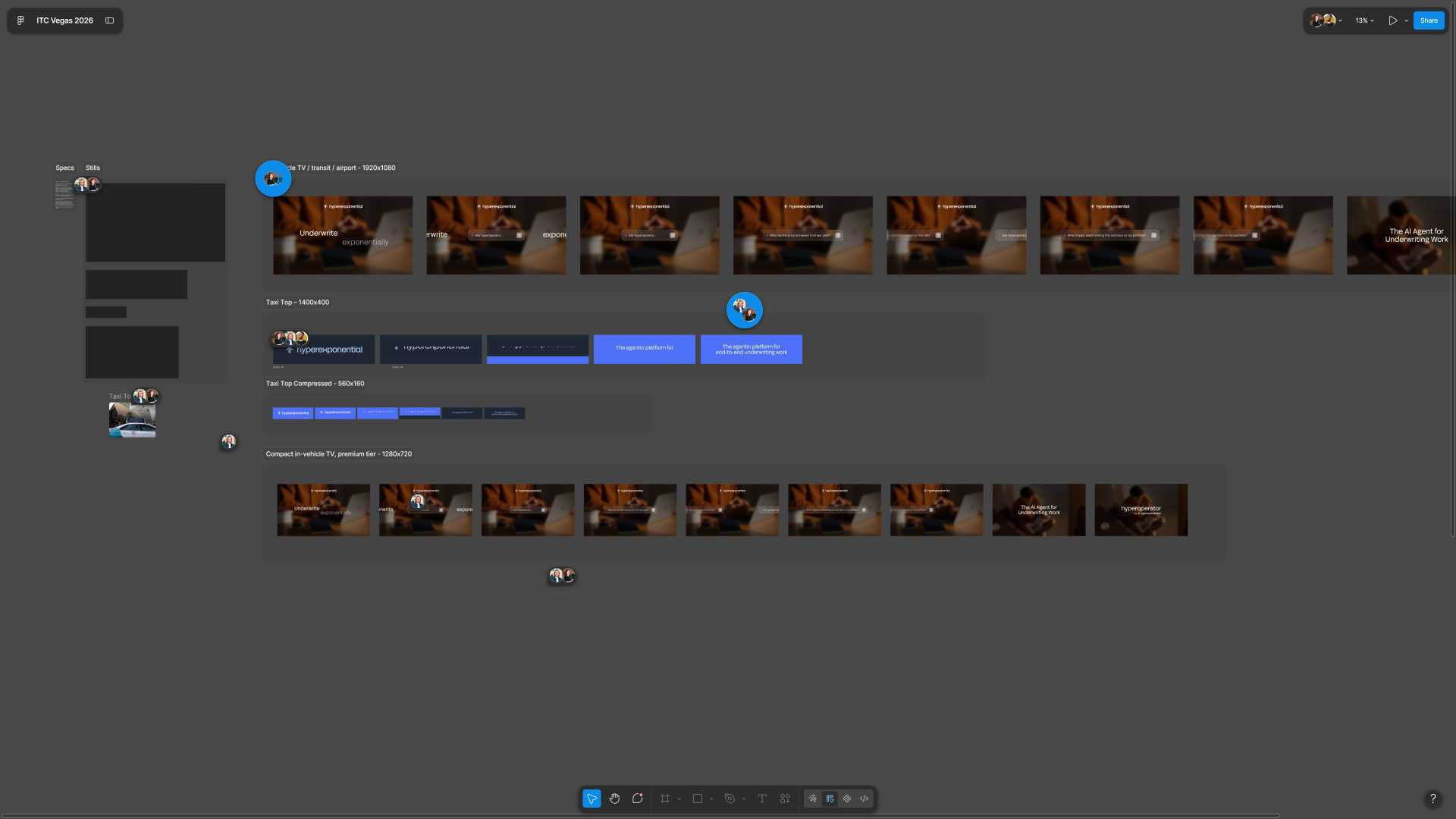
I reused the same color-control approach I had developed for the hx Live speaker boards, so both versions could be driven from the same setup. This meant changes only needed to be made once, even as the campaign continued to move into new formats and environments.
Making the Sizzle
For hx Live NYC, I also worked on a sizzle video for the Developer Experience & Calculation Engine. Using existing product screencasts, I created the visual structure around them, including animated boards, transitions, and supporting motion, working from a Figma storyboard alongside the supplied footage and music.
One of the more technical moments involved creating a rig that allowed lines and supporting elements to follow a moving object automatically, rather than being manually keyframed. This made the animation easier to adjust while keeping the elements consistent throughout the sequence.

“Working with Bart is always a great experience. He’s thoughtful, collaborative, and always willing to help, even when we’re working against tight deadlines. He makes every collaboration feel easy and seamless.”
MAITANE BAUTISTA BRAND DESIGNER, HYPEREXPONENTIAL
One Collaboration, Many Environments
Across hx Live London, hx Live NYC, and the hyperoperator launch, the work kept moving between contexts. Some animations were designed for people sitting in an event venue, while others were built for social media, a product homepage, a railway station, Times Square, or a moving taxi.
The underlying challenge stayed similar: take an existing visual language and make it work through motion, while adapting it to the environment, the audience, and the constraints of each screen. What started with a set of speaker introductions in London became an ongoing collaboration with hyperexponential, with the same motion systems and ideas continuing to evolve across new projects.
For me, that’s one of the most rewarding parts of motion design: creating something that doesn’t just work once, but can become a flexible system for whatever comes next.
CREDITS
Production
Director, Corporate Marketing
Creative Lead
Brand Designer
Motion Designer
hyperexponential
Deyan Atanasov
Paul Jude Stekhoven-Smith
Maitane Bautista
Bartłomiej Otłowski
Ready to bring
your ideas to motion?
Tell me about your project and goals. I would love to help.